Thursday, February 16, 2017

Gender and Valentine's Day Ads

    
An example of a vintage Valentine's Day ad
Valentine's Day has been tied to commercialism for centuries, and complaints about these ties are nothing new. Ads for the holiday tend to focus on promoting cultural norms related to consumerism, emphasizing that the best way you can spend your Valentine's Day is by getting your significant other a gift to make them appreciate you more--often using sexual innuendos to highlight the pros of buying specific goods.

A Valentine's Day ad from Natan, a jewelry company, with obvious sexual connotations
Ads like the one featured above rely on sexist messaging to sell products. The message in this particular ad tells male consumers that giving their loved ones expensive diamond rings will literally make them open up their legs. The use of common feminine posture and clothing reinforces this message. It not so subtly suggests that a woman's heart can be "bought," for the right price. Other ads can be a little more subtle with this theme, although such ads don't explicitly discourage the norm created by other ads.


Dairy Queen's Valentine's Day ad from 2016

Some ads, however, take a satirical approach to the holiday. In 2016, for example, Dairy Queen launched a satirical ad which ridiculed the ties between the holiday and commercialism. The ad itself starts out like a typical Valentine's Day ad, featuring a couple cuddled together near a fireplace. The man takes out a gift, giving it to his significant other, who opens it...revealing a red spoon. The ad is meant to promote a new red velvet cake from Dairy Queen. As Megan Gerber points out, the ad pokes fun at the stale, often sexist conventions of the commercialized Valentine’s Day. The ad is ridiculing the notion that buying someone a gift will make them swoon, confronting the cultural standards set by other ads. It should be emphasized that the ad is still actively trying to sell a product, however, sending a message that consumerism is still ultimately the best way to win someone over on Valentine's Day.

Valentine's Day ads also tend to focus on gender and relationship norms as well, generally featuring a man and a woman. Some ads in recent years have gone against this established norm, instead featuring LGBT+ couples in their Valentine's Day ads. Lush, a cosmetics company known for its "ethical" stances, launched an ad campaign on social media for the recent holiday featuring same-sex couples. The ads, according to a spokesperson for the company, were meant to show that love transcends gender. While the ads still promoted a product, they went against traditional social norms while simultaneously focusing on couples being together, minimizing the commercial aspect of the ads.

Thursday, February 9, 2017

Leia and Gender Roles in the Original Star Wars Trilogy

Leia as she appears in Episode V: The Empire Strikes Back
With Carrie Fisher's passing late last year, many fans of the Star Wars series reminisced about her role as Princess Leia in the original Star Wars trilogy. Fisher was lauded for her portrayal of the character, who was originally a strong female character in a series which featured more men than women in major roles. Fisher paved the way for future strong female characters as well, standing out as a role model that went beyond the general mold. Leia as a character breaks away from some gender norms, but conforms to some as well.

A New Hope begins with Leia's capture, setting the stage for the often used "rescue the princess" trope. Despite this, Leia is established as a strong female character right off the bat, defying Darth Vader's orders in spite of his menacing presence. Leia resists multiple attempts to uncover the location of the Death Star plans, establishing her as a fighter that isn't a mere damsel in distress. This trait is highlighted multiple times throughout the trilogy, such as when Leia takes the lead during the rescue mission on the first Death Star. Even though she still needs help, she's still able to take care of herself, and others.

Leia quickly formulates an escape plan

Leia's role as a leader, as shown in the aforementioned scene, is referenced multiple times in the trilogy. While Luke joins other members of the Rebellion in an attack on the Death Star, Leia remains behind, acting as one of the commanders behind the scenes. Leia continues to be a major leader in the sequel, serving as one of the main Rebellion leaders on Hoth in the beginning of Episode V. This trend continues in Episode VI, in which she personally attempts to rescue Han by posing as a bounty hunter and later leads an assault on Imperial forces on Endor.

It's also important to note that Leia's character arc extends into a romantic subplot with Han. Mary Peterson points out that Leia was a princess who fell in love without losing her identity. Leia's character still remains defiant, continuing to act as a leader without sacrificing her newfound love. Conversely, her love for Han never overtakes her other traits.

The most controversial aspect of Leia's character is her appearance in Episode VI, commonly referred to as "Slave Leia," Leia is captured while attempting to free Han, and is forced to wear an incredibly revealing bikini outfit. As Tricia Barr points out, there is no doubt Carrie Fisher was put in an outfit intended to sexualize her. Fisher revealed that the outfit itself made her extremely uncomfortable while filming Episode VI, as did the film crew's reaction to the outfit; she outright stated the outfit was intended to make Leia "more female." While Leia continues to be her rebellious self while wearing the outfit, even strangling her captor to death at one point, the outfit still attempts to titillate the audience, especially in regard to merchandising.

Although Leia's strong personality breaks through traditional gender roles and subverts audience expectations, there are still some stereotypical elements to her portrayal. While the positive elements outweigh the negative aspects, the negative aspects shouldn't be ignored.

Thursday, February 2, 2017

Gender in the News Media

      
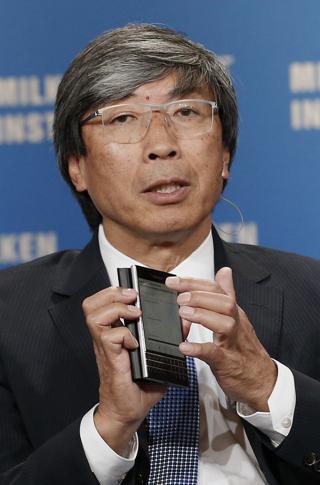
                            From left to right: Jeff Bezos, Michael Bloomberg, and Patrick Soon-Shiong
                                               
In the middle of 2016, Forbes published a list of some of the richest billionaires who own US-based news media. Included on the list were Jeff Bezos, the founder of Amazon and owner of the Washington Post, Michael Bloomberg, the founder and CEO of Bloomberg L.P., Patrick Soon-Shiong, then the second largest shareholder in Tribune Publishing Company, and Rupert Murdoch, the executive co-chairman of 21st Century Fox and the chairman of News Corp. The people included in the list share one major feature: their gender. Most of the billionaires included on the list were also Caucasian, with a few exceptions like the aforementioned Soon-Shiong.

AAUW's earnings chart

The concentration of power based on gender should not come as a surprise, however, as it somewhat reflects overall societal trends. According to the American Association of University Women, in 2015, women working full time in the United States typically were paid just 80 percent of what men were paid. The AAUW states that women are expected to reach pay equity with men in 2059 if the rate in closing the gap between men and women follows the rate between 1960 and 2015. The organization also notes that if change continues at a slower rate seen since 2001, women will not reach pay equity with men until 2152. The pay gap is even worse for women of color. The distinct gap in pay, combined with past earning trends and the inheritance of old money, speaks volumes as to why men continue to exert hegemony over the news media.


Overall representation in terms of gender according to the WMC
The inequalities between gender representations in news media extend beyond higher leadership positions as well. The Women's Media Center's 2015 edition of their yearly study on the gender gap in news media (it should be noted that the data actually comes from 2014) states that, overall, men generated 62.1% of news while women generated 37.3%. This gap is a recurring theme in the study. For example, men represented 64.6% of supervisors in newspaper-based news media and 69.2% of all TV news directors. White men made up 55.59% of daily newspaper employees while white women made up 31.1%; minorities were even worse off in terms of representation. This results in men, especially white men, becoming the voice of the news media, decreasing the visibility of women and minorities in terms of the general public's perception of who makes the news. The patriarchal structure also puts news media outlets at risk of portraying androcentric viewpoints instead of concurrently relying on multiple diverse viewpoints.

Despite our society's slow progress towards gender equality, the news media is still plagued by inequality. Leadership positions in the news media are increasingly becoming concentrated in fewer and fewer, typically male, hands. As David Croteau et al. state in "The Economics of the Media Industry," this could lead to undue political and social influence. Their message can be taken a step further in light of the information covered in this post, by stating that the concentration and conglomeration of the news media in the hands of men lends undue political and social influence to men. This effect ranges from the top of the hierarchical chain to the bottom, covering positions ranging from CEOs to supervisors, reporters, and editors.